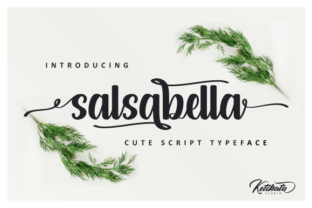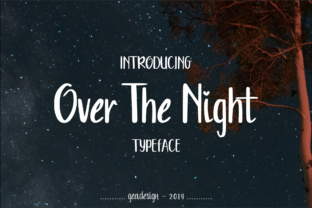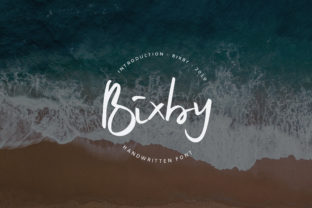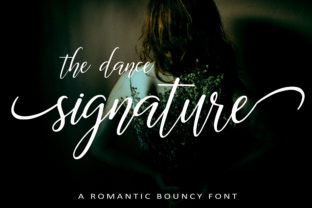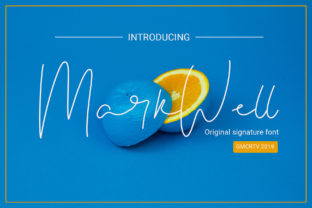
Markwell Font: A Handwritten Script for Handmade Product Labels
I remember the first time I opened Markwell in my design software. I was sitting at my kitchen table, surrounded by candle jars, blank kraft tags, and a stack of cardstock, trying to decide what kind of lettering would finally feel right for my small batch of honey vanilla soy candles. The labels I had been testing felt too stiff, too digital, too much like something off a store shelf. I wanted that handcrafted warmth that says someone actually made this. That’s when I typed “Honey & Vanilla” into the text box, switched the font to Markwell, and watched the letters soften into something that looked like it had been written with a fine-tipped pen by a calligrapher who takes her time. That moment changed how I approached every product in my shop.
The Visual Personality That Makes Markwell Stand Out
Markwell is an original handwritten script that walks the line between elegant and approachable. Its strokes have a natural variation—thick where a real pen presses down, thin where it lifts off—that gives each letter a living, breathing quality. The swashes and loops are generous without being fussy. The lowercase letters connect smoothly, but there are little irregularities in the spacing that keep it from looking mechanized. When I placed it next to a traditional calligraphy font, Markwell felt more like a personal note than a formal proclamation. It has the kind of charm that makes a customer pick up a product and turn it over to read the ingredient list, even if they weren’t planning to.
This font works especially well for short phrases, names, and titles. I use it for the main line on my candle labels—“Cinnamon Clove,” “Sea Salt Beckons,” “Morning Light”—and it gives each scent a distinct personality without overpowering the design. The uppercase letters have elegant flourishes that draw the eye, while the lowercase remains readable and grounded. Markwell is not a font you want to use for a full paragraph of body text; its magic lives in those two-to-five-word moments where you want the typography itself to feel like a handmade touch.
Bringing Markwell Into Real Products
Since that first candle label, Markwell has found its way into nearly every corner of my shop. I print it on matte sticker paper for the top of my hand-poured candles, and the ink dries crisp without any bleeding, even on the small 2-inch circles. For gift tags, I pair it with a thin twine wrap and a tiny sprig of dried lavender—suddenly, a simple kraft tag looks like something from a boutique. I also design printable greeting cards using Markwell for the sentiment. A “Happy Birthday” in this script feels personal, like I wrote it out myself, but it also reproduces perfectly on my home printer. That consistency matters when you are selling digital downloads that customers need to print at home on their own equipment.
For my farmhouse-style wooden signs, I use Markwell in SVG format with my Cricut. The font’s clean outlines cut beautifully on vinyl, and the fine curves do not lose detail even when I size them down to a 4-inch welcome sign. I have also tested it on mugs and tote bags with iron-on transfer paper, and the lettering stays sharp after washing. The key, I have learned, is to keep Markwell at a size where the thinnest strokes are still visible. For small stickers—anything under an inch—I bump up the font weight or use a slightly thicker script to keep legibility. But for product tags, labels, and signs, Markwell performs beautifully across materials.
How Markwell Affects Product Presentation and Customer Perception
Typography is the first thing a customer sees before they ever smell a candle or touch a piece of fabric. When I switched from a generic sans serif to Markwell on my packaging, I noticed a shift in how people described my brand. Words like “elegant,” “handmade,” and “thoughtful” started appearing in reviews. That is the power of a premium script font. Markwell communicates that someone spent time on the details. It suggests quality and care without forcing the customer to read a long backstory. On a shelf crowded with other handmade goods, a well-chosen typeface can be the difference between a product being picked up or passed over.
For handmade sellers, consistency is just as important as first impressions. I use Markwell across my entire product line—on labels, hang tags, packaging inserts, and even my shop banner. That visual repetition builds a brand identity that customers begin to recognize. When they see the same elegant script on a new product, there is a sense of trust. They know what to expect. Markwell has become part of my brand’s voice, quietly assuring buyers that the quality inside the package matches the thoughtfulness outside.
Font Pairing: Getting the Balancing Right
Markwell is a script font that steals the show, so it needs a simple counterpart to keep the design from feeling cluttered. I pair it most often with a clean sans serif like Montserrat or Lato. For example, on a candle label, the scent name appears in Markwell, while the smaller line—“hand poured with natural soy wax”—is set in Montserrat Light. That contrast gives the eye a rest and makes the script stand out even more. For wedding invitations, I sometimes use a light serif like Playfair Display for the couple’s names, then Markwell for a decorative line like “together with their families.” That combination feels classic without being stuffy.
If you are designing for a more rustic or boho style, pairing Markwell with a rough handwritten font can also work, but be careful not to layer two scripts that compete for attention. The general rule I follow: let Markwell be the decorative element, and let a simpler font handle the supporting text. It keeps the layout clean and the message clear.
Technical Details Every Maker Should Check
Before you start printing or cutting, take a few minutes to explore what’s included in the Markwell font package. Many premium scripts come with stylistic alternates, ligatures, and swashes. Those extras allow you to customize letter combinations—turning a standard “S” into something with a sweeping tail, for example. I always check the character set, especially if I am designing bilingual products or want to use punctuation and numbers that match the script’s elegance. Markwell usually comes in common file formats like OTF, TTF, and sometimes WOFF, which cover both desktop printing and web use for mockup previews.
Another critical step: verify the commercial license terms. If you plan to sell physical products like candles, stickers, mugs, or shirts, make sure the license covers commercial use. The same goes for digital downloads—printable wall art, invitation templates, and planner pages that customers purchase from your shop. Some fonts restrict the number of products you can produce or the revenue you can earn. Others, like Script Amp fonts (the category Markwell belongs to), often allow broad commercial use, but always read the fine print. It saves headaches later and ensures your shop stays compliant.
Real Projects Where Markwell Shines
- Wedding stationery: Save-the-dates, invitation suites, thank-you cards, and welcome signage. Markwell brings romance without being overly ornate.
- Home decor prints: Printable wall art with quotes or family names. The script works well centered on a 8x10 or 5x7 frame.
- Planner and journal pages: Section headers or decorative phrases. Markwell adds a hand-lettered feel to digital templates.
- Seasonal tags and gift labels: Holiday tags, birthday favor stickers, and thank-you tags for handmade soaps or candles.
- Boutique packaging: Tissue paper stamps, bag toppers, box inserts, and ribbon tags. The script elevates the unboxing experience.
- Fabric projects: Tote bags, aprons, and T-shirts with iron-on or screen-printed lettering. Keep the design simple and centered.
Each of these projects benefits from Markwell’s authentic hand-drawn look. When I test a new product, I always start by typing the main wording in Markwell to see if it matches the mood. More often than not, it does.
A Few Practical Notes on Readability and Cutting
Because Markwell is a script with fine strokes, I avoid using it at sizes below 12pt for printed items. For stickers, 14pt or higher is safer. When I run it through my Silhouette machine, I set the blade depth slightly shallower than for a bold block font to prevent the thin cuts from tearing. If I am layering vinyl, I ensure the offset path is set to a width that keeps the letters connected. A little test cut on scrap material saves a lot of wasted vinyl. The same caution applies to heat transfer—press firmly but briefly so the thin parts of the letters don’t lift.
For digital mockups and listing images, Markwell renders beautifully on screen. I use it in previews for Etsy listings, adding a subtle drop shadow or a hand-drawn underline to make the text feel tactile even before the customer clicks “add to cart.” That emotional connection, rendered in pixels, helps customers imagine the real product in their hands.
Making Markwell Your Own
Every maker has a different voice, and Markwell has enough personality to adapt without losing its character. On my candle labels, it feels warm and earthy. On a friend’s wedding signage, it felt airy and timeless. On a set of planner stickers I created, it felt playful yet organized. The font itself doesn’t dictate the style—it responds to the colors, materials, and textures around it. That flexibility is rare in a premium script, and it’s why Markwell has become a staple in my design toolkit.
If you are a handmade seller or printable creator looking for a font that brings authentic handwritten elegance to your products, Markwell is worth a close look. Test it on your labels, your packaging, your digital templates. See how it changes the way people perceive your work. Sometimes the right letter shape is all it takes to turn a product into something someone treasures.